Blog

January 19, 2026

Published by Admin

Furniture Removal From Tight Spaces That Most Homeowners Worry About
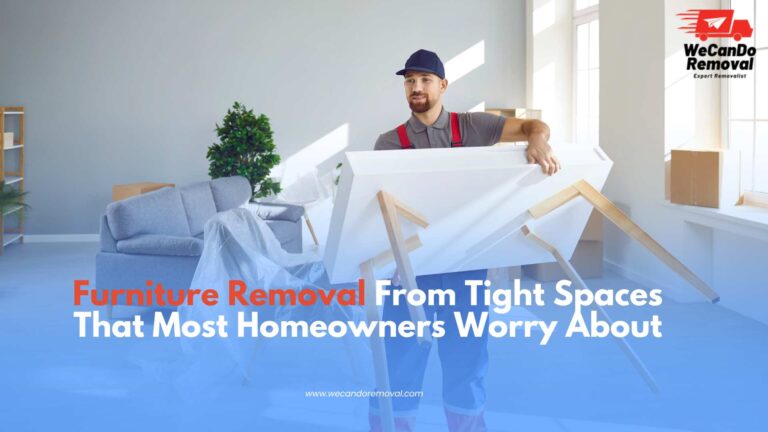
How movers safely remove large furniture from difficult spaces
If moving had a villain, it would be furniture stuck halfway through a doorway. That moment when the couch jams, the wardrobe scrapes the wall, and everyone freezes, wondering if something is about to break.
For homeowners and renters, tight spaces are the most anxiety-inducing part of any move. Not boxes. Not packing. Furniture removal.
This guide explains why furniture gets stuck in tight spaces, the real risks of forcing it, and what professional movers do differently to remove it safely in Sydney homes and apartments.
If you are searching house removal near me or comparing a trusted removalist company for a house removal Sydney move, this is exactly the kind of practical advice that keeps your move calm and damage-free.
Catchphrase: Tight spaces cause big stress.
The Tight Spaces Homeowners Worry About Most
Most homes were not designed with furniture removal in mind. They were designed to look good, not to let a three-seater sofa glide out like it is on wheels.
Common tight spaces that cause moving anxiety
- 🚪 Door frames that feel just a few centimetres too small
- 🧱 Narrow hallways that do not allow turning space
- 🪜 Staircases with tight landings and awkward corners
- 🏢 Apartment lifts with strict size limits
- ↩️ Sharp turns where furniture gets wedged mid-rotation
These spaces create panic because once furniture is stuck, people feel trapped between pushing harder and risking damage.
Catchphrase: Homes weren’t designed for moving.
Why Furniture Gets Stuck (It’s Not Just Size)
Most people assume furniture gets stuck because it is too big. In reality, it is usually because of angles, balance, and weight distribution.
Two centimetres can be the difference between sliding through smoothly and scraping a wall.
The real reasons furniture jams in tight spaces
- 📐 Incorrect angles when turning through doorways
- ⚖️ Poor weight distribution that pulls furniture off-line
- 🎯 The centre of gravity shifting during lifting
- 👀 Limited visibility so people push without seeing contact points
If you want to understand what separates safe technique from risky guessing, this guide on moving safety tips explains how injuries and damage usually happen during tight-space moves.
Catchphrase: It’s about angles, not muscle.
The Real Risks of DIY Furniture Removal in Tight Spaces
Trying to force furniture through a tight space is where injuries and damage happen. It only takes one slip, one tilt too far, or one rushed push.
Common DIY risks homeowners do not expect
- 🧱 Scratched walls, chipped paint, and damaged door frames
- 🛋️ Broken furniture legs, split frames, or bent hardware
- 🩹 Back, shoulder, and knee injuries from awkward lifting
- 💰 Repair bills that cost more than hiring professionals
“It was only a small corner turn. Then we heard the wall scrape and the whole mood changed.”
If you want a clearer checklist of what goes wrong when heavy items are rushed, this article on how to move heavy furniture breaks down the mistakes people make when they rely on brute force.
Catchphrase: DIY mistakes are expensive.
How Professional Movers Remove Furniture From Tight Spaces
Professionals do not try and see what happens. They assess access points, measure, plan angles, and coordinate movements so furniture moves safely instead of dangerously.
What pros do differently during tight-space furniture removal
- 📏 Measure the doorway, hallway, and furniture dimensions quickly
- 🧠 Plan the rotation and tilt sequence before lifting
- 🗣️ Use clear callouts so everyone moves together
- 🛡️ Protect walls, corners, and floors before the first attempt
When tight spaces are involved, having a specialist furniture removalist matters because the technique and protection are built into the job, not added as an afterthought.
Catchphrase: Planning beats brute force.
The Tools That Make Tight Space Furniture Removal Safer
The right tools reduce risk dramatically. Without them, even strong people struggle because the job becomes uncontrolled.
Equipment professionals use for tight spaces
- 🛞 Dollies and trolleys for weight distribution
- 🪢 Straps and harnesses for controlled movement
- 🧤 Furniture blankets and wrap to prevent scratches
- 🧱 Corner and floor protection in narrow access points
- 🧊 Sliders to reduce friction on delicate floors
Catchphrase: Tools reduce risk.
Apartment vs House Tight Space Challenges in Sydney
Apartments add pressure. Lift booking windows, strata rules, and narrow common areas mean you have less flexibility and more eyes watching.
Houses can still be tricky with older staircases, narrow hallways, and tight entry turns, but apartment moves are often the highest-pressure version of tight spaces.
Apartment-specific tight space issues
- 🏢 Lift booking limits and strict time windows
- 📏 Lift size restrictions that force angle changes
- 🔇 Noise rules that compress your schedule
- 🚗 Loading zones that may be taken or restricted
If you are planning a full household move and want it structured end-to-end, a home removal service can coordinate access, timing, and protection so the building rules do not control your day.
Catchphrase: Apartments add pressure.
The Bulky Items That Cause the Most Tight Space Problems
Some furniture pieces are repeat offenders. They combine weight, size, awkward balance, and sharp corners that love door frames.
Common “problem items” in tight spaces
- 🛋️ Large sofas and sectionals
- 🚪 Tall wardrobes and cabinets
- 🛏️ Bed frames and mattresses
- 🧊 Appliances like fridges and washing machines
Catchphrase: Big items break plans.
What You Can Do Before Movers Arrive (So Tight Spaces Feel Less Tight)
Homeowners can reduce tight-space stress with a few simple steps. Preparation makes space, even when the space is technically the same.
Simple prep steps that make a big difference
- 🚪 Clear pathways completely, including hallway corners
- 🧱 Remove wall art and fragile décor from tight routes
- 📏 Measure the narrowest points and share them with your mover
- 🔩 Remove doors if safe and practical to increase clearance
- 🗣️ Point out the tight turn spots before lifting begins
If you are still choosing who to trust, this guide on what makes a good removal company explains how to spot the teams that will take protection and planning seriously.
Catchphrase: Preparation makes space.
Same-Day Moves and Tight Spaces (Why Rushing Is Dangerous)
Same-day moves magnify risk. When time is tight, people rush. Rushing increases mistakes, injuries, and damage. In tight spaces, slowing down is often the fastest solution.
Safe moves usually finish sooner than rushed ones because there are fewer setbacks.
Catchphrase: Rushing creates damage.
Need Help With Tight-Space Furniture Removal?
Tight stairwells, narrow hallways, and awkward corners do not have to turn into damage, injuries, or stress.
If you want your furniture moved safely with the right technique, protection, and planning, our team is ready to help.
👉 Contact us today and tell us what you are moving and what the tight access looks like. We will guide you through the safest plan.
Tight spaces are solvable. You just need the right approach.
Share:


Related Blog: