Blog

January 29, 2026

Published by Admin

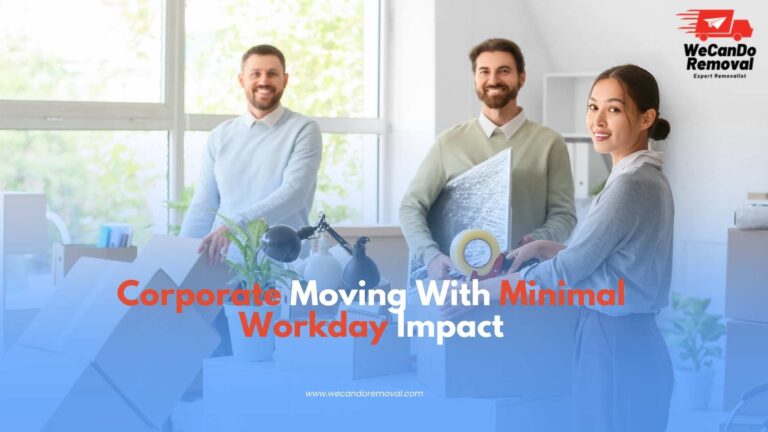
Corporate Moving With Minimal Workday Impact
How planning keeps teams productive
Most businesses do not fear moving because of the furniture. They fear the disruption. Lost hours, missed calls, confused staff, and systems not ready when they should be.
The physical move is rarely the problem. The real risk is how deeply it cuts into a normal workday. Professional movers understand one thing clearly: the goal is not relocation, it is continuity.
This guide explains how a structured corporate moving can protect productivity, reduce downtime, and keep teams calm, whether you are moving across the street or planning a larger transition in Sydney.
Catchphrase: The move isn’t the risk, disruption is.
The True Cost of Workday Disruption
When a business moves, productivity does not just pause. It fragments. A few minutes here waiting for a desk. An hour there reconnecting equipment. Half a day lost because files are not where people expect them.
Those minutes multiply across teams. Staff feel unsettled, managers get pulled into logistics, and clients notice slower responses.
What disruption looks like in real businesses
- ⏳ Teams waiting because key areas are blocked
- 📞 Calls and support queues slowing down
- 🧠 Managers juggling logistics instead of leading
- 😬 Clients noticing delays and confusion
If you want a clear view of what “good” looks like on moving day, this guide explains it: professional movers near me.
Catchphrase: Minutes lost multiply quickly.
How Professionals Plan Moves Around People, Not Furniture
The biggest corporate moving mistake is planning the move like a storage problem. Professionals plan it like an operational one.
They map workflows before they lift anything, because departments rely on each other and the wrong delay can affect the entire business.
What pros map before the move begins
- 🧩 Team dependencies so critical functions stay live
- 🎯 Priority departments that must restart first
- 🚪 Access routes that keep walkways open
- 📦 Packing logic that supports fast setup
To avoid common planning traps, this guide on office moving mistakes shows what causes disruption and how to prevent it.
Catchphrase: People come before packing.
Phased Moving Strategies That Keep Teams Working
The smoothest corporate moves rarely happen all at once. They are phased. Departments move in waves, critical teams move outside peak hours, and some staff never fully stop working.
Low-disruption corporate moving strategies
- 🌙 After-hours and weekend moves for high-traffic areas
- 🏢 Department-by-department staging to keep operations live
- 🧭 Temporary work zones so productivity continues
- 🚚 Split deliveries so priority items arrive first
If you want a clear structure for planning, this office relocation checklist makes it easier to organise tasks without creating last-minute chaos.
Catchphrase: Movement without interruption.
Packing Systems Designed for Fast Restart
In corporate relocations, unpacking speed matters more than packing speed. The faster teams can sit down and function, the less workday impact you feel.
Professionals use systems that reduce decision-making at the new site. Boxes are labelled for location, priority, and setup flow, not vague descriptions.
What slows businesses down most
- 📦 Unclear labels that force teams to open everything
- 🔌 IT gear arriving without its matching cables and parts
- 🗂️ Documents packed with no chain of priority
- 😵 Too many people “helping” without roles
For a simple packing structure that works in real workplaces, this packing checklist helps teams pack in a way that supports faster restart.
If you want packing handled professionally to reduce staff distraction, a Packing Unpacking Services option can make the transition smoother and less stressful.
Catchphrase: Unpacking speed defines success.
IT, Documents, and Sensitive Equipment Handling
Corporate moves involve more than desks. Screens, servers, phones, and confidential documents require controlled handling. Speed without structure creates risk.
Professionals treat IT and sensitive materials with planning, sequencing, and accountability so nothing goes missing and the business can restart safely.
High-risk items that need controlled handling
- 💻 Computers, monitors, and peripherals
- 📡 Network equipment and cabling
- 🗃️ Archived files and confidential documents
- 🖨️ Printers and sensitive multi-function devices
Catchphrase: Security is part of efficiency.
Load Order and Transport Timing: Arrival Order Matters
If desks arrive before IT, staff wait. If files arrive last, work stalls. Load order is a business continuity decision, not a packing decision.
Professional movers load and deliver based on operational priority, so the new site becomes functional in the right sequence.
Priority-based delivery sequence examples
- 🚪 Reception and critical operational desks first
- 🔌 IT and network setup components early
- 🗂️ Essential files next, then non-urgent archives
- 🪑 Non-essential furniture last
Catchphrase: Arrival order matters.
Communication That Keeps Staff Calm and Focused
Uncertainty is a productivity killer. When staff do not know what is happening, they stop working early and start worrying early.
Professionals support clear communication: what staff need to do, what they do not need to worry about, and when normal work resumes.
Simple communication moves that reduce stress
- 📣 A short staff briefing with clear roles and timing
- 🧾 Simple pack instructions that avoid confusion
- ✅ A restart plan so teams know what “ready” means
- 📍 Clear contact person so questions do not spread chaos
Catchphrase: Calm teams work better.
Why the Right Partner Makes the Process Feel Invisible
The best corporate moves do not become stories. They feel invisible because problems never reach the surface. Experienced teams absorb access issues, timing changes, and setup complications quietly.
If you are comparing providers, this guide on choosing a removal company helps you spot quality traits and avoid disruption-driven red flags.
For corporate relocations, a Commercial Business Removalist approach is designed for structured timelines, staged moves, and minimal workday impact.
Catchphrase: The best move is the one no one talks about.
Corporate Moves Still Need a Human Plan (Not Just a Business Plan)
Even corporate moves affect people. Stress shows up when timelines tighten and uncertainty spreads. A calm move is built early with planning, clear packing systems, and the right support.
And if your corporate move overlaps with staff home changes or team relocations, this guide on tips for moving house helps reduce stress before the first box is packed.
For employees moving out of a rental during a work transition, this moving out of rental guide helps avoid common damage traps and last-minute stress.
If you also need help with staff home relocations, a Residential Removalist option supports smooth household moving services in Sydney.
Catchphrase: Business continuity includes people.
Need Help With Your Move?
If you are planning a move and want it done safely, professionally, and without the stress, our team is here to help.
Whether you are moving locally, relocating your home, or just need advice on the next steps, feel free to get in touch with us.
👉 Contact us today to discuss your move and get the support you need.
Your move does not have to be complicated. Let us help to make it simple.
Share:


Related Blog: